What We Learned at the DRX Marketing Seminar in Tampa
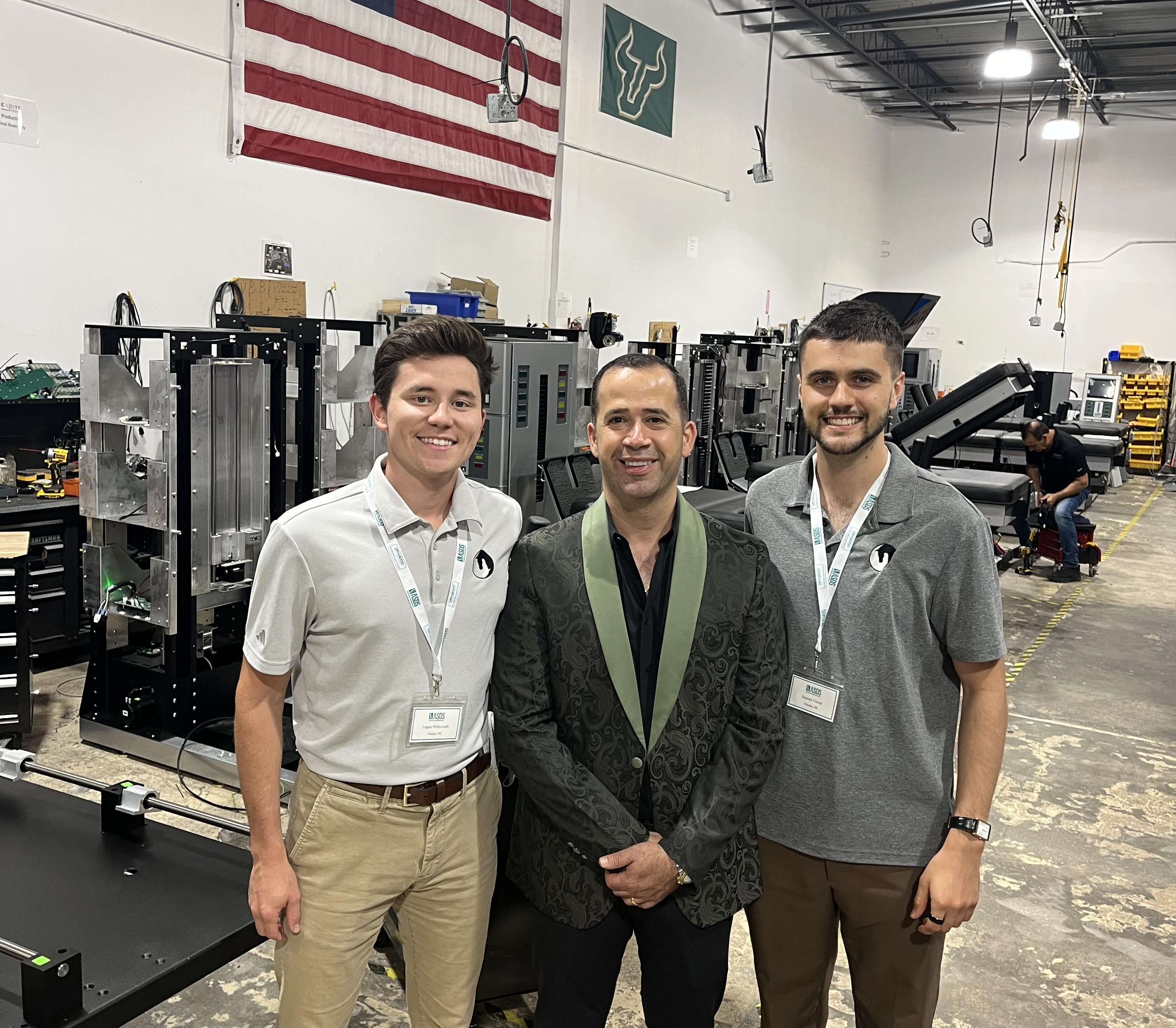
This past weekend, Dark Horse Media founders Logan Whitcomb and Sam Corey traveled to Tampa, Florida to attend a DRX Marketing Seminar hosted at Excite Medical headquarters.
The event brought together spinal decompression providers, practice owners, researchers, and industry leaders from across the country to discuss patient outcomes, practice growth, and the future of non-surgical spinal decompression.
Speakers included Saleem Musallam, owner of Excite Medical, Dr. Corey Bowden, who operates 11 DRX9000 tables in Utah, and Nathan Schilaty, DC, PhD, a researcher helping advance the clinical evidence behind spinal decompression therapy.
One of the highlights of the trip was touring the Excite Medical facility and seeing firsthand how DRX9000 systems are built, tested, and supported. It was impressive to meet the people behind the technology and see the level of investment being made in research, education, and innovation.
While the event covered a wide range of topics, several marketing and practice-growth lessons stood out that can help nearly any chiropractic or spinal decompression practice grow.
1. Your Best Leads May Already Be in Your Database
Many practices focus almost exclusively on generating new leads while overlooking a valuable asset: their existing patient database.
Former patients often return when symptoms flare up, new issues develop, or they simply need guidance on their next steps. Yet many clinics haven't contacted these patients in years.
One of the simplest strategies discussed was database reactivation. A team member can call former patients with a simple message:
"Hi, this is Dr. Smith's office. We were just checking in to see how you're doing."
This accomplishes several things:
Verifies contact information
Re-engages inactive patients
Strengthens relationships
Creates opportunities to schedule returning patients
Many practices are sitting on hundreds or even thousands of patients who already know, like, and trust them.
2. LinkedIn Is Becoming More Important for Healthcare Providers
When people search for a doctor online, LinkedIn profiles often appear near the top of search results.
In addition to helping with visibility on Google, professional profiles are increasingly referenced by AI-powered search tools when gathering information about businesses and professionals.
Every practice owner should consider:
Completing every LinkedIn profile field
Posting educational content regularly
Highlighting specialties and credentials
Keeping business information current
A strong professional presence online helps build trust before a prospective patient ever contacts your office.
3. Content Should Be Distributed Across Multiple Platforms
Many practices create content but only publish it on one or two platforms.
The most successful practices are distributing content across multiple channels, including:
Facebook
Instagram
YouTube
LinkedIn
Google Business Profile
Website blogs
Email newsletters
X (Twitter)
An important takeaway from the seminar was that content should not simply be copied and pasted everywhere.
Algorithms are becoming increasingly capable of recognizing duplicate content. Practices often see better results when they adapt content to fit each platform's audience and format.
One educational topic can become:
A Facebook post
An Instagram Reel
A YouTube video
A blog article
A LinkedIn post
An email newsletter
The goal isn't necessarily to create more content. It's to get more value from the content you're already creating.
4. Small SEO Improvements Add Up
Search engine optimization doesn't always require major website changes.
One often-overlooked opportunity is image optimization.
Search engines cannot fully understand what appears inside an image. Instead, they rely on image file names, captions, and alt text descriptions to determine relevance.
For example:
Poor image description:
IMG_2048.jpg
Better image description:
DRX9000 disc therapy treatment for sciatica patients in (your city)
When multiplied across dozens of website images, these small improvements can contribute to stronger search visibility over time.
5. Patients Buy Outcomes, Not Treatments
One of the most valuable presentations came from Dr. Corey Bowden.
His message was simple:
Patients don't pay premium fees to solve low-value problems. They pay to solve high-value problems.
Many providers focus on symptoms:
"Sciatica is making it difficult to shower."
"You have pain when you walk."
"Your back hurts when standing."
While these symptoms matter, they are rarely the real reason a patient chooses to move forward with care.
The deeper questions are:
Is the pain preventing them from playing with their grandchildren?
Has it caused them to stop exercising and gain weight?
Are they missing vacations, hobbies, or social activities?
Is it affecting their independence and quality of life?
For example, instead of focusing on the fact that a patient struggles to shower, focus on the fact that the condition may be affecting their hygiene, confidence, and daily routine.
Instead of focusing on shooting pain while walking, focus on how that pain is preventing them from staying active, healthy, and engaged with their family.
The larger the life impact, the more valuable the solution becomes.
This isn't about exaggerating symptoms. It's about helping patients understand the true cost of doing nothing.
6. Use Language Patients Actually Understand
Another key lesson from Dr. Bowden was to avoid industry terminology whenever possible.
Healthcare providers often use terms that make perfect sense to other providers but mean very little to patients.
For example, many practices advertise:
"Spinal Decompression Therapy"
The problem is that most patients have no idea what spinal decompression means.
However, many patients know:
They have a bulging disc
They have a herniated disc
Their doctor told them they have a disc problem
Because of that, terms like:
"Disc Therapy"
often communicate more clearly than technical treatment names.
Patients don't need to understand the mechanics of the treatment before becoming interested. They simply need to understand that it may help solve a problem they already know they have.
A good rule of thumb is:
Use the words your patients use, not the words your profession uses.
A Final Thought
One thing we appreciated most about the event was seeing the level of investment Excite Medical continues to make in advancing the field.
Through clinical research, provider education, and events like this, they are helping improve both the science and business side of spinal decompression. As the owner of a large and growing company, Saleem Musallam could spend his time in countless other ways. Instead, he spent an entire day teaching, facilitating discussions, and helping providers learn from one another.
For us, the biggest takeaway was simple:
The practices experiencing the most consistent growth are usually not relying on one magic marketing tactic. They are executing the fundamentals well, staying connected with patients, creating content consistently, improving their online presence, and continually refining their processes.
Those small improvements compound over time.
If you're looking to grow your chiropractic or spinal decompression practice through patient acquisition, content marketing, automation, and follow-up systems, we'd love to talk.